Things to Do
Kaunos Ancient City, Dalyan: History, Ruins & 2026 Visitor Guide
 DalyanEditorUpdated
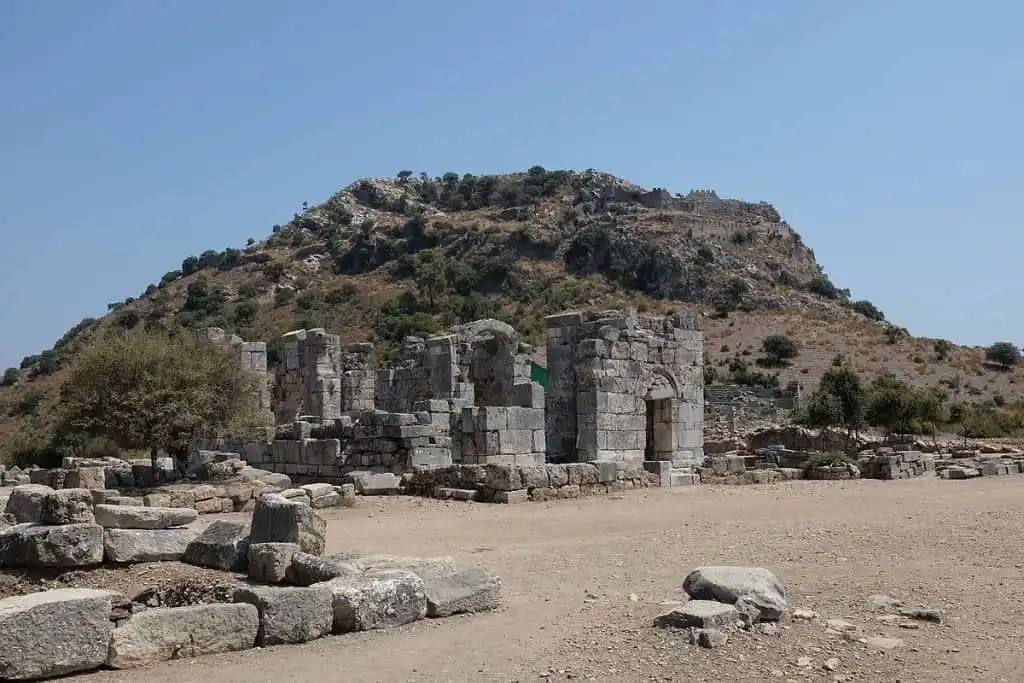
Table of Contents
- Kaunos at a glance
- A short history of Kaunos
- What to see at Kaunos
- The theatre
- The harbour and agora
- Temples and sacred terraces
- Roman baths and the Byzantine church
- The acropolis and city walls
- The rock tombs
- The latest excavations (2025–2026)
- How to get to Kaunos
- By rowing boat from Dalyan (the classic way)
- By car ferry or car
- On a river boat tour
- Tips for visiting Kaunos
Kaunos is a 2,800-year-old port city on the far bank of the Dalyan river, a short rowing-boat ride and walk from Dalyan. Founded by the Carians around the 9th century BC, it is famous for its rock-cut temple tombs, a 5,000-seat theatre and its silted-up harbour. In 2026 entry for foreign visitors was €3, the site opens daily from 08:30, and it is on UNESCO’s World Heritage Tentative List.
The Ancient City of Kaunos, within the boundaries of the Köyceğiz district, was one of the most important port cities of the region in antiquity, but over time it lost this role as its harbour silted up. Today it is one of the most atmospheric ancient sites on the Turkish coast, with reed beds where ships once anchored and views over the whole Dalyan delta to the sea.
Kaunos at a glance
| Founded | Around the 9th century BC, by the Carians |
| Location | Çandır, west bank of the Dalyan river, opposite Dalyan |
| Entry (2026) | €3 for foreign visitors (cash); Müzekart valid |
| Opening hours | Daily from 08:30; closes around 19:00–19:30 in summer, 17:30 in winter |
| Getting there | Rowing boat across the river, then a 30-minute walk; or by river boat tour |
| Time needed | 2–3 hours |
| Status | UNESCO World Heritage Tentative List; excavated since 1966 |
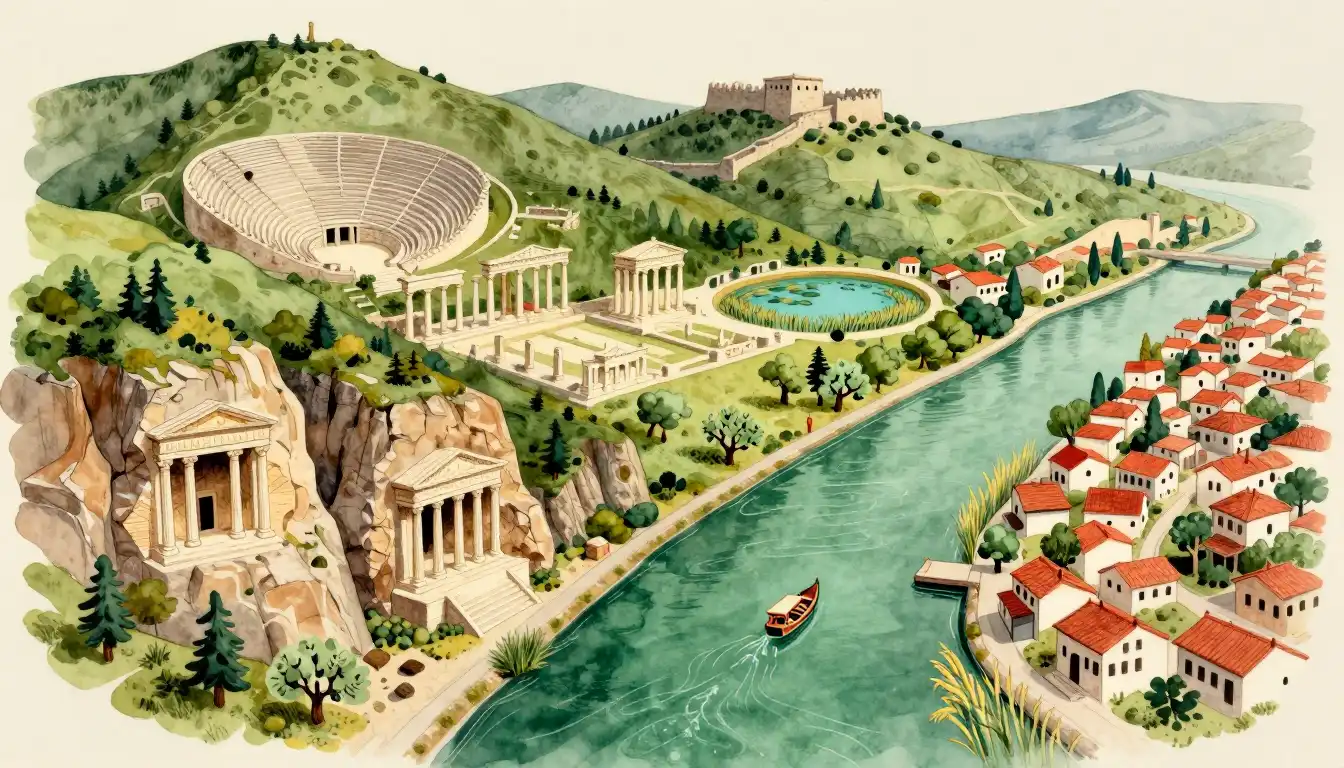
- Acropolis
- Theatre
- Harbour lake
- Temples & agora
- Rock tombs
- Dalyan River
- Dalyan
- Rowing boat to Çandır
A short history of Kaunos
Carian beginnings. Kaunos was founded by the Carians on a natural harbour at the mouth of the Dalyan river, on the border between Caria and Lycia. The city’s Carian name was Kbid; the Greeks called it Kaunos and the Romans Caunus. The historian Herodotus noted that the Kaunians had customs quite unlike those of their neighbours.
Persians and the Hekatomnids. In the 6th century BC Kaunos came under Persian rule. In the 4th century BC, under the Carian Hekatomnid dynasty best known for Mausolus of Halicarnassus, the city was redesigned on Greek lines with new walls, temples and public buildings, and its elite carved the famous rock tombs into the cliffs above the river.
Hellenistic and Roman port. After Alexander the Great, Kaunos passed between the Ptolemies, Rhodes and finally Rome. It grew rich on trade, and Kaunian figs were famous across the ancient world, but the city also had a reputation for fever: the marshes around the harbour bred malaria-carrying mosquitoes.
Decline. The river slowly carried silt into the harbour, pushing the coastline further and further away. Combined with earthquakes and malaria, this ended Kaunos’s life as a port, and by the late Byzantine period the city was largely abandoned. Today the old harbour is a small reed-fringed lake, and the sea is several kilometres away at Iztuzu Beach.
Rediscovery and excavation. The ruins were identified in 1842 by the British surveyor Richard Hoskyn. Systematic excavations began in 1966, and in 2026 they entered their 60th year. Numerous sculptures, coins, ornaments and figurines have been excavated over the decades.
What to see at Kaunos
The theatre
The best-preserved monument at Kaunos is its Greek theatre, built into the slope of the acropolis hill and later remodelled by the Romans. It could seat around 5,000 spectators, and its upper rows give the classic view over the harbour lake and the delta.
The harbour and agora
At the foot of the hill lies the harbour lake, the remnant of the ancient port. Along its edge are the remains of the agora (market square), a fountain house and a long stoa (colonnaded hall) where merchants traded. Walking here, it is easy to imagine ships tied up where the reeds grow today.
Temples and sacred terraces
Above the agora are terraces with the foundations of temples, including a round temple platform and a sanctuary associated with Apollo. Columns and carved blocks lie where they fell, and some have been re-erected by the excavation team.
Roman baths and the Byzantine church
The Romans added a large bath complex next to the theatre, and in the Byzantine period a basilica church was built nearby. Both are among the most substantial standing walls on the site.
The acropolis and city walls
The rocky hill above the theatre was the acropolis, ringed by city walls whose foundations go back to the Hekatomnid rebuilding. The climb is steep and unshaded, but the view over the Dalyan delta to the sea is worth it.
The rock tombs
On the way from the river landing you pass the city’s necropolis, including the temple-fronted King’s Tombs high in the cliffs. They are described in detail in our guide to the Dalyan rock tombs.
The latest excavations (2025–2026)
Excavations at Kaunos are led by Assoc. Prof. Dr. Ufuk Çörtük. In 2025 the team worked mainly inside the Archaic city walls and in the monastery sector, finding Late Neolithic obsidian tools, far older than the Carian city, as well as finds from the Turkish period. In 2026, the 60th season, work concentrated on a 3,250 m² monastery area inside the Archaic walls, with cisterns, vaulted rooms, groups of buildings and narrow streets. Remains from the Turkish and Ottoman periods are also adding new layers to the city’s long history.
How to get to Kaunos
By rowing boat from Dalyan (the classic way)
From the Dalyan riverfront, small rowing boats ferry passengers across to the village of Çandır (about 50 TL per person in 2025). From the landing it is about a 30-minute walk to the site entrance, passing the rock tombs on the way. Wear proper shoes, as the path is uneven, and bring water.
By car ferry or car
A car ferry also crosses the river, and you can drive or walk to the site from the other side. In summer there can be a wait for the ferry.
On a river boat tour
Most Dalyan boat trips stop at Kaunos on their way to the mud baths and Iztuzu Beach. This is the easiest option, although time at the site is usually limited to about an hour.
Tips for visiting Kaunos
- Go early. There is very little shade, and the site gets hot by late morning in summer.
- Bring cash in euros or lira for the ticket, and plenty of water.
- Climb the theatre. The top rows give the best view of the harbour and the delta.
- Watch your step. Paths are rocky and some areas are still being excavated; stay out of fenced trenches.
- Combine it with the tombs and the river. Cross by rowing boat, walk past the tombs to Kaunos, and return by boat or by the car ferry.
- Spring and autumn are ideal. April–May and September–October are much more comfortable than July and August.
If you are interested in historical sites, we suggest you visit the ancient city of Kaunos. Even if you are not, the setting alone makes it one of the most memorable places in Dalyan.
Prices and opening hours were checked against 2026 sources in November 2026. They can change during the season, so please confirm locally (Kaunos site office: +90 252 614 11 50).
Frequently asked questions
How much does it cost to enter Kaunos?
In April 2026 entry for foreign visitors was €3, payable in cash. Turkish citizens pay a lower lira price, and the Müzekart museum pass is valid.
What are the opening hours of Kaunos?
Kaunos opens daily from 08:30. In summer it closes at around 19:00–19:30 and in winter at 17:30. The ticket office closes about 30 minutes earlier.
How do you get to Kaunos from Dalyan?
Cross the river by rowing boat from the Dalyan riverfront to Çandır (about 50 TL per person in 2025), then walk about 30 minutes past the rock tombs to the entrance. Most Dalyan river boat tours also stop at Kaunos.
How long do you need at Kaunos?
Allow two to three hours to see the theatre, the harbour, the agora and the temple terraces, plus time for the crossing and walk from Dalyan. Start early in summer, as there is little shade.
Is Kaunos a UNESCO World Heritage Site?
Kaunos is on UNESCO's World Heritage Tentative List, the step before full inscription. Its rock-cut tombs are highlighted for their unique temple-style facades.
Who discovered Kaunos?
The site was identified in 1842 by the British surveyor Richard Hoskyn. Systematic excavations began in 1966, and in 2026 they entered their 60th year.